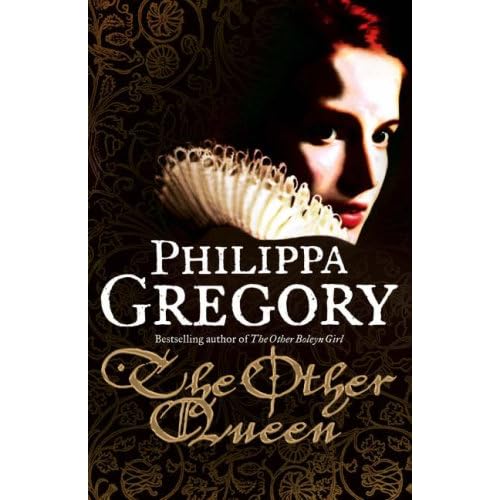
Book Review: To be honest I was highly disappointed in this book. The story deals with the capture and imprisonment of Mary, Queen of Scots by then Queen of England, Elizabeth I. The tale is indeed a long one recited by three personalities: George Talbot, Earl of Shrewsbury, his wife Bess of Hardwick and Mary. The narration is in these three voices, and carry the weight of their personalities, circumstances and lives. Gregory does indeed create believeable characters in them and a facinating narration of this most dramatic period in English history. However, in my reading of this book, I found her sole most facinating character to be "indomitable" Bess. George Talbot comes across as a snivelling weakling who can't hold two thoughts together! Mary comes across as a scheming harpie who carries herself less like a queen except in the eyes of her admirer, George who is primarily wooed by her striking beauty. In spite of her orchestration of an unsuccessful uprising, her constant attempts at escape, and his ultimate financial ruin; the man is apparently so besotted with her beauty and queenly carriage that he is helpless to save himself. Perhaps this is the story Gregory wishes to paint of this lackluster, real-life character but it would have been a much stronger storyline had the man seemed to have more of a brain in his head!
Mary is painted as a woman who besides constantly pining dramatically, constantly harps on her right to be queen, her assumed entitlement to three crowns, her son as an afterthought, her sickness, her beauty...etc., etc., etc. Fickle and weak but with a nasty streak of cunning, she seems to depend wholely on her misguided and desperate knights in shining armor...! After a while, that got old!
Bess is the one character in this book that has complexity and depth; a more...finished...personality than the other two put together. Halfway through I started skipping pages and just read Bess's narrations. In fact, she starts the book and she ends it. She does however constantly wax on and on about her prowess as a gold-digging, social climber. But as tedious and long as her monologues on her self-worth and her self-made fortunes are, she is less uninteresting than the other two characters.
Perhaps Gregory meant this novel to portray Bess as the leading character, and perhaps in this she achieved what she aimed for; but the utter failure in my opinion, of her other two characters to carry as much weight in the narration causes the reader to be more bored than bound by the progression of the storyline.
Overall, if you are loyal to Gregory you will at least get through this book!
Book Synopsis:Using the multiple-viewpoint technique that worked well in The Boleyn Inheritance (2006), Gregory fictionalizes a little-explored episode in the life of Mary, Queen of Scots. In 1568, after fleeing rebellious Scottish lords, Mary is placed into the custody of George Talbot, Earl of Shrewsbury, and his wife, Bess of Hardwick. This turns their Derbyshire estate into a hotbed of intrigue and possible treason. George, normally loyal to a fault, falls in love with Mary; Bess secretly reports to William Cecil, Queen Elizabeth’s spymaster, while fretting about her foolish husband and the continual draining of their funds; Mary plays them against one another while plotting to escape, with Cecil noting her every move. Gregory skillfully evokes the suspenseful atmosphere—it was never certain that the 1569 Rising of the North in favor of Catholic Mary would fail—but the protagonists’ inner thoughts, as presented in short alternating chapters, are unnecessarily repetitive. Although this isn’t her best work, Gregory’s writing is sharpest toward the end, as the unavoidable consequences of Mary’s long imprisonment are finally felt by all. --Sarah Johnson --This text refers to the Hardcover edition. Synopsis Courtesy of Amazon.com
For more information or to purchase: http://www.amazon.com/Other-Queen-Novel-Philippa-Gregory/dp/1416549145/ref=sr_1_1?ie=UTF8&s=books&qid=1242084536&sr=1-1


No comments:
Post a Comment