Showing posts with label Historical Fiction. Show all posts

Tuesday, May 19, 2009

The Constant Princess, Philippa Gregory

Book Review: I've noticed of late that I have had a little bit of trouble getting into the feel and rhythm of Gregory's books. I can't say what it is, perhaps the author's style has become slightly monotonous  for my tastes, but this does not take away from the fact that Gregory's books are as brilliant as they ever were!

In fact, The Constant Princess is one of the most beautifully written of all her works! Fictionally detailing the life and reign of Queen Katherine of Aragon, the first of Henry VIII's six wives, this book brings to the reader's mind this most noble of his wives. She was indeed a true princess through and through, to her death she held herself as the true queen of England and would not give ground to her usurpers.  In fact in her last
 letter to Henry, in the last stage of her life, she signs her name as 'Katherine the Queen'. 

Born to two of the greatest monarchs in Christendom, Ferdinand of Aragon & Isabella of Castile, she came to England a child bride to the then Crown Prince, Henry VII's son Arthur. As history would have it, Arthur died a mere six months after their wedding leaving Katherine a widow at 17.  She was then betrothed to Henry, the younger son who was six years her junior. And the rest as they say is history!

Gregory carefully takes her reader through the early life of Catalina, Infanta of Spain; we get a glimpse of her life with her parents as they are on campaign against the Moors. The reader gets an entrance into the sweeping grandeur of the conquered palaces, where Catalina spends most of her childhood within the walls of the
 now Spanish occupied harems.

From this lazy, feminine background the Infanta and Princess of Wales emerges to the male dominated, politically charged shores of 16th century England. Henry VII has claimed the crown from the blood-drenched battlefields and presents to Catalina the stock of royalty, the image of the vulgar commoner. We watch as she holds to herself as a true princess of the blood and seems to gleam among the rough horse-stock of England's dubious monarchy.

Gregory lends an almost Sheherzadean quality to the relationship between Arthur and Catalina, where she regales and entrances him with tales from far-off lands, tales of conquests and conquered, her Isabella's legendary fearlessness, her hero-worship of her father, her life in Spanish conquered Moorish palaces, and more!

We are taken through Catalina's first marriage, to her second with young Henry and her life with him; through it all we watch as she grows from a young, defiant girl to a woman in love, a woman who comes to the height of her expectations, a woman who grows to learn the strings of the English court, a woman who learns to hold her tongue and flatter, a woman who goes through the sorrow of one lost child after another, a woman who reconciles her child's worship of her parents with the reality of them, and a woman who to her dying day knew where her place in life stood.

This is indeed a book that endears an otherwise lost historical figure to the hearts of her readers. Definitely worth reading!

Book Synopsis: As youngest daughter to the Spanish monarchs and crusaders King Ferdinand and Queen Isabella, Catalina, princess of Wales and of Spain, was promised to the English Prince Arthur when she was three. She leaves Spain at 15 to fulfill her destiny as queen of England, where she finds true love with Arthur (after some initial sourness) as they plot the future of their kingdom together. Arthur dies young, however, leaving Catalina a widow and ineligible for the throne. Before his death, he extracts a promise from his wife to marry his younger brother Henry in order to become queen anyway, have children and rule as they had planned, a situation that can only be if Catalina denies that Arthur was ever her lover. Gregory's latest (after Earthly Joys) compellingly dramatizes how Catalina uses her faith, her cunning and her utter belief in destiny to reclaim her rightful title. By alternating tight third-person narration with Catalina's unguarded thoughts and gripping dialogue, the author presents a thorough, sympathetic portrait of her heroine and her transformation into Queen Katherine. Gregory's skill for creating suspense pulls the reader along despite the historical novel's foregone conclusion. 
Synopsis Copyright © Reed Business Information, a division of Reed Elsevier Inc. All rights reserved. Courtesy of Amazon.com

For more information or to purchase: http://www.amazon.com/Constant-Princess-Boleyn-Philippa-Gregory/dp/074327248X

Thursday, May 14, 2009

In the Company of the Courtesan, Sarah Dunant

Book Review:
My lady, Fiammetta Bianchini, was plucking her eyebrows and biting color into her lips
when the unthinkable happened and the Holy Roman Emperor's army
blew a hole in the wall of God's eternal city
letting in a flood of half-starved, half-crazed troops bent on pillage and punishment.

As the inside flap states "Thus begins In the Company of the Courtesan, Sarah Dunant's epic novel of life in Renaissance Italy."

The book is narrated from the height, eyes, ears and heart of the dwarf Bucino Teodoldi. Bucino who is the constant companion, gatekeeper, and exalted pimp of the high-class courtesan Fiammetta Bianchini narrates an exotic tale that sweeps from the cobbled, depraved and invaded streets of middle sixteenth century Rome to the water-logged canals of Venice.

Though graphic by turns, the narration is bare of flattery. Bucino and Fiammetta tell it like it is. There is no soft lighting, no flowery phrases to mask the depravity of the trade that these two individuals are engaged in, make a living from and through which in the end comes not only their salvation but a certain amount (if the author is to be believed) of fame due to the talents of one young Tiziano Vecellio.

The story could very well have ended on page 214; halfway through the book. And it would simply have been a very good tale about a courtesan and her dwarf companion. But Dunant will not leave her readers without a climax! No pun intended, for the reader will go through this book and experience a series of highs and lows, like the tides that come in along the cobbled banks of Venice's waterways.

Without the other 147 pages and the story therein, this narration would indeed have been incomplete! For it is through these pages that the characters truly excel themselves! Bucino and Fiammetta go from being two depraved individuals to something more...something redeemed. They go from being an exotic story, to a glimmer of hope.

I'm not ashamed to say I teared up at the turn of the last page for very few books have the power to truly endear its characters to the readers heart and this was indeed one of the select few.


Please Note: Adult Content. There is a vulgarity of phrase and narration in this novel that may not appeal to all readers.


Book Synopsis: Renaissance Italy enchants in Dunant's delicious second historical (after The Birth of Venus), as a wily dwarf Bucino Teodoldi recounts fantastic escapades with his mistress, celebrated courtesan Fiammetta Bianchini. Escaping the 1527 sacking of Rome with just the clothes on their backs (and a few swallowed jewels in their bellies), Fiammetta and Bucino seek refuge in Venice. Starved, stinking, her beauty destroyed, Fiammetta despairs—but through cunning, will, Bucino's indefatigable loyalty and the magic of a mysterious blind healer called La Draga, she eventually recovers. Aided by a former adversary, who now needs her as much as she needs him, Fiammetta finds a wealthy patron to establish her in her familiar glory. Through Bucino's sharp-eyed, sharp-tongued narration, Dunant crafts a vivid vision of Venetian life: the weave of politics and religion; the layers of class; the rituals, intrigue, superstitions and betrayals. Dunant's characters—the steely courtesan whose glimpse of true love nearly brings her to ruin; the shrewd and passionate dwarf who turns his abnormalities into triumph; and the healer whose mysterious powers and secrets leave an indelible mark on the duo—are irresistible throughout their shifting fortunes. (Feb.) Synopsis Copyright © Reed Business Information, a division of Reed Elsevier Inc. All rights reserved.

Monday, May 11, 2009

Ransom, Julie Garwood

Book Review (By Ayla): I started reading this book and couldnt even get past the second chapter because it was boring.

Book Review (By Mimi): First let me say that this book was originally reviewed by Ayla, and for a while a considered simply commenting on her post with my review, it seemed easier to insert it into the body so it's all together! Love you Ayla! lol:O)

After reading her review on Ransom, I HAD to read it for myself! Simply because I ADORE Historical Fiction and its counterpart Historical Romance. In my opinion they should go hand-in-hand! Yes, I'm a romantic at heart!

Now, when most people think of Historical Romances, they wouldn't be necessarily wrong if they lumped it all into the Harlequin Romance genre. But a well-written Historical Romance or HR for future reference, can be a beautiful thing! I never read an HR for the sexual content, as is the first comment I get when I tell them I'm reading this genre. The sexual content is least of what interests me, if at all! A well written HR explores much more! It is usually a study in period norms which includes dress, habits, transport, architecture, literature, art, lifestyle, fashions, speech, vocabulary, historical facts and characters loosely or not so loosely based in fiction, etc.!!!
I'm also into the traditionally dashing, debonair, heroic gentleman of the romanticized Renaissance and the burly, demanding knight of the middle ages...not necessarily in that order! Coupled with the equally romanticized intelligent yet feminine, strong-willed yet delicate heroins of the traditional HR! Escapism right?

Julie Garwood captures these features in her characters with Ransom! She has a truly refreshing take on the dashing knight and the princess-in-need-of-rescue theme! Some of the key elements in Brodick Buchanan (a Scottish Highlander) and Lady Gillian's story, in a nutshell:
- Her father is murdered by an evil Lord Alford.
- The story centers around Arianna's Box, a stolen jewelled box that belonged to King John's mistress.
- An evil plot is hatched by a Highland traitor to murder the laird of a Highland clan whereby his young brother was set to be kidnapped.
- Lady Gillian rescues the unfortunate boy and so meets Brodick.

What I thoroughly enjoyed about this book is the utter chivalry of the male characters. In the modern day and age where women are portrayed as liberated and equals of men it is indeed refreshing to see an author with a different view of the female-male relationship. The female characters in Ransom are far from shrinking violets! They are strong, brave, resourceful and in this is their beauty. The male heroes are far from overbearing and ogre-like, but instead they value the women they are portrayed with, they are quick to sing her praises, protective to a fault, respectful, and sincere.

As for the adult content in this novel, I was glad to see that the author upheld a Christian-like and indeed old-fashioned outlook on intimacy. For all the novels in this genre that I have read which contain a more 'modernized' narration of sexual intimacy, this book was refreshingly old-fashioned.

I would definitely recommend this novel for any reader who is not only interested in the Historical Romance genre, but also for anyone who is looking to escape to the realm where knights wear shining armor...or kilts(!) and women who are in need of rescuing!

Book Synopsis:In Ransom, New York Times bestselling author Julie Garwood returns to her beloved Highlands and the dark days of the despotic rule of King John to reacquaint readers with Scottish chieftain Brodick Buchanan, first introduced in The Secret. Brodick finds himself playing protector to Gillian, an exquisite English beauty, who is desperate to find her long-lost sister and a treasure of incalculable worth--one for which many already have died, including Gillian's own father. Coerced by the fiendish Baron Alford, who murdered her father before her eyes and usurped her birthright 14 years earlier, Gillian must return to England with Arianna's Box, a bejeweled golden box commissioned by King John, or her beloved Uncle Morgan will be tortured to death. In spite of Gillian's fragile looks and her loathsome English bloodlines, Brodick encounters a woman of immeasurable courage and determination, one not at all intimidated by his legendary temper or imposing size. And as he realizes that he has met his match in Gillian--whose sense of honor and duty equals his own--their passion for each other grows ever stronger in this thrilling historical. --Alison Trinkle --This text refers to an out of print or unavailable edition of this title.


For more information or purchase:http://www.amazon.com/Ransom-Julie-Garwood/dp/074347418X/ref=sr_1_1?ie=UTF8&s=books&qid=1241634055&sr=8-1

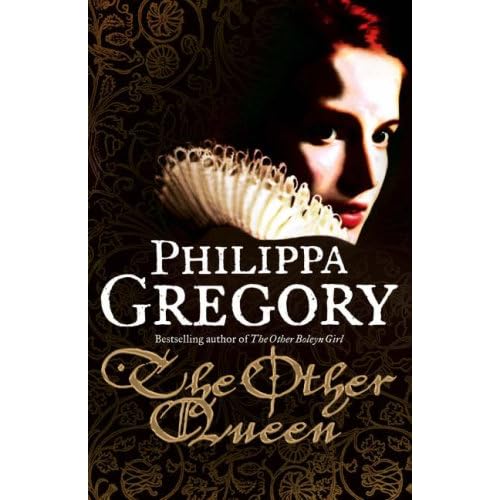
The Other Queen, Philippa Gregory


Book Review: To be honest I was highly disappointed in this book. The story deals with the capture and imprisonment of Mary, Queen of Scots by then Queen of England, Elizabeth I. The tale is indeed a long one recited by three personalities: George Talbot, Earl of Shrewsbury, his wife Bess of Hardwick and Mary. The narration is in these three voices, and carry the weight of their personalities, circumstances and lives. Gregory does indeed create believeable characters in them and a facinating narration of this most dramatic period in English history. However, in my reading of this book, I found her sole most facinating character to be "indomitable" Bess. George Talbot comes across as a snivelling weakling who can't hold two thoughts together! Mary comes across as a scheming harpie who carries herself less like a queen except in the eyes of her admirer, George who is primarily wooed by her striking beauty. In spite of her orchestration of an unsuccessful uprising, her constant attempts at escape, and his ultimate financial ruin; the man is apparently so besotted with her beauty and queenly carriage that he is helpless to save himself. Perhaps this is the story Gregory wishes to paint of this lackluster, real-life character but it would have been a much stronger storyline had the man seemed to have more of a brain in his head!


Mary is painted as a woman who besides constantly pining dramatically, constantly harps on her right to be queen, her assumed entitlement to three crowns, her son as an afterthought, her sickness, her beauty...etc., etc., etc. Fickle and weak but with a nasty streak of cunning, she seems to depend wholely on her misguided and desperate knights in shining armor...! After a while, that got old!


Bess is the one character in this book that has complexity and depth; a more...finished...personality than the other two put together. Halfway through I started skipping pages and just read Bess's narrations. In fact, she starts the book and she ends it. She does however constantly wax on and on about her prowess as a gold-digging, social climber. But as tedious and long as her monologues on her self-worth and her self-made fortunes are, she is less uninteresting than the other two characters.


Perhaps Gregory meant this novel to portray Bess as the leading character, and perhaps in this she achieved what she aimed for; but the utter failure in my opinion, of her other two characters to carry as much weight in the narration causes the reader to be more bored than bound by the progression of the storyline.


Overall, if you are loyal to Gregory you will at least get through this book!


Book Synopsis:Using the multiple-viewpoint technique that worked well in The Boleyn Inheritance (2006), Gregory fictionalizes a little-explored episode in the life of Mary, Queen of Scots. In 1568, after fleeing rebellious Scottish lords, Mary is placed into the custody of George Talbot, Earl of Shrewsbury, and his wife, Bess of Hardwick. This turns their Derbyshire estate into a hotbed of intrigue and possible treason. George, normally loyal to a fault, falls in love with Mary; Bess secretly reports to William Cecil, Queen Elizabeth’s spymaster, while fretting about her foolish husband and the continual draining of their funds; Mary plays them against one another while plotting to escape, with Cecil noting her every move. Gregory skillfully evokes the suspenseful atmosphere—it was never certain that the 1569 Rising of the North in favor of Catholic Mary would fail—but the protagonists’ inner thoughts, as presented in short alternating chapters, are unnecessarily repetitive. Although this isn’t her best work, Gregory’s writing is sharpest toward the end, as the unavoidable consequences of Mary’s long imprisonment are finally felt by all. --Sarah Johnson --This text refers to the Hardcover edition. Synopsis Courtesy of Amazon.com

Wednesday, May 06, 2009

Magdalene, Angela Hunt

Book Review: I fell in love with this book. I read this one around Easter, and again it was so fitting. This was a powerful story of redemption, beautifully written. The ending was absolutely amazing and had me on the edge of my seat and in tears. A must read.

Book Synopsis:
Mary Magdalene
The controversial woman with a past only one Man could forgive. A true love story that changed the face of history.
"I was Miryam of Magdala, seller of fine fabrics and wife of Yaakov the fisherman. With my husband and son, I held a place of honor among my countrymen until a company of rogue soldiers took everything from me. I might not be Roman, but I knew injustice when I saw it. And I had been most grievously wronged."
In an era when women are sequestered and silenced, Miryam of Magdala lives a contended life until her son’s careless gesture evokes a hostile action that shatters her serenity. With no hope of justice, Miryam commits and unthinkable act…and descends into depths of darkness that threaten her life and her sanity.
Even after Yeshua the Messiah dramatically restores her life, Miryam can neither forget nor forgive unresolved injustices. Prodded by a hunger for vengeance she will not deny, this woman of uncommon courage risks her life and her heart by drawing destiny into her own hands.
Synopsis courtesy of Amazon.com

Washington's Lady, Nancy Moser

Book Review: I read mixed reviews on this book, but I LOVED it! I thought it was a wonderful story that really connected me with the country's First Lady. It was historically accurate, moving, and emotional. I was pulled into the story, sometimes frustrated with Martha, sometimes inspired by her. Being a soldier's wife on our first military separation, this was a read I really needed.

Book Synopsis:
She dreams of a quiet life with her beloved George, but war looms... Though still a young woman, Martha Custis is a widow. But she is not without means and has no desire to remarry. Not, that is, until a striking war hero steps into her life and she realizes she is ready to love again. Yet she wonders whether this man, accustomed to courageous military exploits, can settle down to a simple life of farming and being a father to her children. Even as she longs for domestic bliss, Martha soon realizes she will have to risk everything dear to her and find the courage to get behind a dream much larger than her own. Known for moving first-person novels of Nannerl Mozart and Jane Austen, Nancy Moser now brings to life the loves and trials of the First First Lady of the United States.
Courtesy of Amazon.com For more information go to:

Friday, May 01, 2009

Duchess of Milan, Michael Ennis

Book Review: This is one of my all time favorite books. I love it so dearly that Jason got it for me on our first date February 14, 2003! Ennis's characters are fragile and robust, passionate and complex, and you can't help but fall in love with each and every one of them!

My heart was in every page, every plot turn and twist, I cried over their sorrows and jumped around madly at their triumphs! And I needed closure after the turn of the last page.

This book is yet another staple on my bookshelves and brings me much joy time and time again!

Book Synopsis: This complex, ambitious novel of Renaissance Italy by the author by Byzantium explores volatile events of the period from 1491 to 1508, as dukes of Naples and Milan scheme viciously, the Pope and the Holy Roman Emperor play politics and the runty Valois king Charles VIII claims kinship with the house of Milan in order to "crusade" over the Alps and install French authority. The tale's appealing protagonist is Beatrice d'Este, who cherishes the poetry of Dante and maintains a healthy awe for the goddess Fortune. Wedded at 15 to faithless, dark-haired Lodovico Sforza, 40, the cruelly powerful son of an upstart condottiere, Beatrice first loathes and then loves her callous spouse, though the development of their relationship is not convincing. Throughout, Beatrice vies with shrewish cousin Isabella of Aragon for the title of Duchess of Milan. Scenes of torture, sex and childbirth; texts of letters; descriptions of gowns, artifacts, dreams, ceremonies and hunt parties; and inserted passages of explanatory history (Leonardo da Vinci periodically reports as engineer at the court of Milan) add color and texture. The narrative sometimes sags beneath the weight of its supernumary characters and compulsive documentation, but the play of strongwilled personalities against a vivid historical background produces a satisfying tale. 60,000 first printing; $60,000 ad/promo. Synopsis Copyright 1992 Reed Business Information, Inc. --This text refers to an out of print or unavailable edition of this title.

For more information or to purchase http://www.amazon.com/Duchess-Milan-Onyx-Michael-Ennis/dp/0451404289/ref=cm_cr_pr_product_top

Reign of the Favored Women, Ann Chamberlin


Book Review: I'm currently reading this novel, and so far, it's pretty good. Will update this post as soon as I'm done reading it!

Book Synopsis: A historical novel on a power struggle between two women in the harem of Sultan Murad of Turkey. They are Safiye, mother of the sultan's only son, and Nur Banu, the sultan's mother and official head of the harem. Each has her own political agenda and on the outcome of the conflict depends the future of the Ottoman Empire. By the author of The Sultan's Daughter. Synopsis Courtesy of Pines Library System.

Harem: A Novel, Dora Levy Mossanen


Book Review: This was definitely an interesting read! However I think three quarters of this book deals with Rebekah and the unfortunate series of events that is her life in the poor Jewish Quarter. Vulgar by turns, and tastelessly graphic this novel only reaches the outer edges of the Harem. Rebekah's daughter becomes a part of the Harem, and ultimately the Shah's favorite, but by the time the reader actually gets to Raven (Gold Dust's daughter) the story has run its course. Three generations of unfortunate women, their stories, against the background of the Harem is a little more than one reader and indeed one novel can handle. I was left hanging.

Let me also say: Adult Content.

Book Synopsis: Lush and erotic, this first novel overflows with the magic and sensuality of Arabian Nights tales, 19th-century orientalist paintings and languorous, silken-pantalooned harem beauties. Set in 14th-century Persia, the tale moves easily between the crowded, garbage-strewn alleys of the Jewish quarter and the magnificent palace of the shah. The shah's palace harem is concealed behind a tracery of delicately carved stone panels, where his 365 wives and their many attendant eunuchs lounge, and the queen mother, Bibi Sultana, rules. In the Jewish quarter, the characters are Rebekah, the indomitable heroine; the ancient Zoroastrian, a seeress; the one-eyed rabbi; the merchant Rouh'Allah, who realizes nearly too late he loves Rebekah; and Moses, fated to be gelded and become a lover to the shah. Rebekah is only 10 when she's married to Jacob the Fatherless, a brutal blacksmith, and branded by him with a hot iron bar between her breasts, a mark that will assume nearly supernatural importance. After Jacob commits suicide, Rebekah becomes a prostitute to support her child, Gold Dust. Determined to place her daughter within the harem, she sells her charms to Narcissus, the chief eunuch, even though he carries "his manhood pickled in a jar." Gold Dust becomes the shah's favorite, but provides the sonless ruler with another daughter, Raven, who will eventually be as implacable as her grandmother. The multifaceted story involves an invasion by the Mongol hordes under Teymour the Lame (Tamerlane) and daring escapes by Rebekah and Gold Dust. Shamelessly exotic, it's a delightful read and a grandly romantic escapade. Synopsis Copyright 2002 Cahners Business Information, Inc.

The Sultan's Harem, Colin Falconer

Book Review: What can I say!? The characters are amazing, the plots are colourful and energetic, the backdrop of history and flavors of the exotic are intoxicating! This is a book rich in language, flawlessly executed. A must read!
I'm reviewing this book months after I read it so I can't remember all the details, but I do remember how intricate it was in customs, colors and backgrounds of the period.

I do remember how much I enjoyed reading it, and I know that should the opportunity make itself available again I would read it again!
As with most fictional novels that have to do with Harems, this book does have adult content. For those of you who prefer your fiction to be sensored.

Book Synopsis: Falconer, author of Feathered Serpent (2002) and When We Were Gods (2000), stirs up a potent brew of splendor and misery in this page-turner set during the reign of sixteenth-century Ottoman sultan Suleyman I, called "the Magnificent" in the West. As seen here, Suleyman is a competent ruler with a fatal flaw: an obsession for Hurrem, his favorite concubine. Embittered by slavery, a "living death," Hurrem will stop at nothing, even the murder of her own sons, in her drive for power and revenge. Caught up in the intrigue are other characters, both historical and fictional: Gulbehar, the mother of Suleyman's heir; Ibrahim, Suleyman's trusted Grand Vizier; Julia, a Venetian who is taken captive by pirates and winds up as one of Suleyman's 300 harem girls; and Abbas, the eunuch in charge of the harem, who loved Julia in his youth and paid a terrible price. Plot twists, an exotic setting, and vivid details compensate for some wooden dialogue. This peek behind the walls of the seraglio will seduce lovers of large-scale historical fiction. Mary Ellen QuinnCopyright © American Library Association. All rights reserved --This text refers to an out of print or unavailable edition of this title.

The Queen's Fool: A Novel, Philippa Gregory

Book Review: I love Philippa Gregory! Anything she puts her pen to is a must-read! However, the Queen's Fool seemed a little...jaded. Although the plots were timeless, the characters classic, and the bakcgrounds vibrantly historic it wanted for ...oomph!

I did manage to get through it inspite of being conflicted between continuing to the finish line and just giving up.

If you are a loyal Gregory fan, then you will get through to the finish!

Book Synopsis: After winning the Parker Romantic Novel of the Year in 2002 for the brilliant The Other Boleyn Girl, Philippa Gregory returns to the Tudor court in this equally absorbing novel. It is 1553, Henry VIII is dead and his young son Edward is now king. 14-year-old Hannah Green, a determined Jewish girl with the gift of foresight, has come to England with her bookseller father to escape the Inquisition in Spain. After a chance meeting with the dashing Lord Robert Dudley at her father's bookshop, Hannah finds a new life as a court fool - and a spy. Reporting to Dudley all that happens around the sickly king, Hannah is also sent to spy on Princess Mary, with whom she strikes up a loyal and lasting friendship. When Edward dies, Hannah finds herself directly involved in the plots and schemes that abound at court as Mary comes to the throne, and struggles with her loyalty to the queen and subsequently to her sister Elizabeth. She wrestles with her sexual awakening, her love for Dudley and her betrothal to her cousin, Daniel, but ultimately cannot fight the male-dominant world she lives in as with her gift of foresight she is constantly manipulated by the powerful men around her for their own ends. Will Hannah be able to survive in a time of treachery, bloodshed and burnings, where her own religious beliefs could be questioned at any time? Unlike the many authors who concentrate on the times of Henry VIII or Elizabeth I, Philippa Gregory has turned her attention to the tumultuous period between the two reigns and takes us from the death of Edward VI up to Elizabeth's ascension with an assured historical touch. We see behind the pomp of the Tudor Court and into the minds of Mary and Elizabeth, rivals for the throne like their mothers before them. This is a powerful and moving tale of an important period in history, seen through the eyes of a young woman who is both observer and player in these tempestuous times. (Kirkus UK) Courtesy of Amazon.com

Innocent Traitor: A Novel of Lady Jane Grey, Alison Weir


Book Review: I have always been heavily into the British aristocracy! Especially Henry VIII and his daughters Bloody Mary & Elizabeth I. By then I had devoured most all of Phillippa Greggory's historical novels that dealt with this subject and was looking for something along the same lines. My search produced Alison Weir. I was sceptical at first being fearcely loyal to my favorite authors, but the moment I started reading Innocent Traitor I was hooked.


Lady Jane Grey is such a small interruption in the whole scheme of the Tudor dynasty's historic machinations that she is famously overlooked and little explored! But in this fantastic portrayal of this brave and unwitting queen Weir embroiders a tapestry of intrigue, heart-wrenching innocence and the fickle hand of destiny for this young woman who in her 17 years was ever propelled to her ultimate demise.


A great read in the fashion of Phillippa Greggory. If you enjoy the works of this author, you will enjoy Weir!


Book Synopsis: Popular biographer Weir (Eleanor of Aquitaine, etc.) makes her historical fiction debut with this coming-of-age novel set in the time of Henry VIII. Weir's heroine is Lady Jane Grey (1537–1554), whose ascension to the English throne was briefly and unluckily promoted by opponents of Henry's Catholic heir, Mary. As Weir tells it, Jane's parents, the Marquess and Marchioness of Dorset, groom her from infancy to be the perfect consort for Henry's son, Prince Edward, entrusting their daughter to a nurse's care while they attend to affairs at court. Jane relishes lessons in music, theology, philosophy and literature, but struggles to master courtly manners as her mother demands. Not even the beheadings of Anne Boleyn and Katherine Howard deter parental ambition. When Edward dies, Lord and Lady Dorset maneuver the throne for their 16-year-old daughter, risking her life as well as increased violence between Protestants and Catholics. Using multiple narrators, Weir tries to weave a conspiratorial web with Jane caught at the center, but the ever-changing perspectives prove unwieldy: Jane speaking as a four-year-old with a modern historian's vocabulary, for example, just doesn't ring true. But Weir proves herself deft as ever describing Tudor food, manners, clothing, pastimes (including hunting and jousting) and marital politics. (Mar.) Synopsis Copyright © Reed Business Information, a division of Reed Elsevier Inc. All rights reserved.

In the Shadow of Lions, Ginger Garrett

Book Review: I was on the hunt for an historical novel through the leaden shelves of our local library but couldn't seem to find anything that piqued my interest! So I randomly picked out a few seemingly semi-interesting novels and was heading out with a heavy sigh when my eye caught a jade green satin gown- illustrated spine...Hmmm....I wonder....Ginger Garrett? Never heard of her...but the cover suggested a thrilling read in historical fiction so I shoved it under my already full arm and headed out.
I got home, sifted through my loot and settled on my lucky find. Not expecting much, I flipped to the first page and discovered four hours later that...four hours had passed...

Suffice it to say, I couldn't put the book down! I took it with me everywhere! And I mean, EVERYWHERE until I'd devoured every intriguing, exciting word!

I consider myself an avid reader of anything historical, be it non-fiction or fiction, romance or autobiographical, educational or poetry. But I had yet to have read a book written by a Christian author, that brought to light startlingly, vividly and with breathtaking clarity the richness of period prose coupled with Christian themes and wielded by characters who were richly arrayed with history.

This book isn't one of your "typical" Christian novels pushing the Christian agenda. Instead it simply tells a story where the Word of God is unquestionably the basis for history itself. Garrett's characters are spectacular in their faith, and that faith is unerringly Christian.
Book Synopsis: "I am the first writer, The Scribe. My books lie open before the Throne, and someday will be the only witness of your people and their time in this world. The stories are forgotten here, and the Day draws close. I will tell you one of my stories. You will record it."
So begins the narration of one such angel in this sweeping historical tale set during the reign of England's Henry VIII. It is the story of two women, their guardian angels, and a mysterious, subversive book . a book that outrages some, inspires others, and launches the Protestant Reformation.
The devout Anne Boleyn catches the eye of a powerful king and uses her influence to champion an English translation of the Bible—Scriptures the common people could read for themselves. Meanwhile, Rose, a broken, suicidal woman of the streets, is moved to seek God when she witnesses Thomas More's public displays of Christian charity, ignorant of his secret life spent eradicating the same book, persecuting anyone who dares read it.
Historic figures come alive in this thrilling story of heroes and villains, saints and sinners, angels and mortals ... and the sacred book that will inspire you anew.
Synopsis courtesy of Amazon.com

Thursday, April 30, 2009

Fair is the Rose, Liz Curtis Higgs

Book Review:
Too painfully tedious to read!!! I have never done this before, but after two chapters I put it down! If you're looking for a good read, this book is definitely not it!

Book Synopsis:
In this sequel to Thorn in My Heart, Higgs, a popular inspirational author, continues her 18th-century Scottish love story paralleling the biblical saga of Jacob and Esau, exemplifying sacrificial and patient love. Sisters Leana and Rose McBride are both in love with handsome Jamie McKie of Glentrool. After conniving with her father to spin a web of deceit and trickery, one sister wears a wedding ring and bears Jamie's child. But will the marriage consummated in the previous novel be honored?

The challenges of adapting the scriptural story to the 18th century are daunting (polygamy, for example, wasn't acceptable in Scotland as it was in biblical times) and make for some contrivances that would be difficult to believe from any author not as talented as Higgs. Or, as the characters muse at one point, "the story was so implausible it had to be true."
Synopsis Copyright © Reed Business Information, a division of Reed Elsevier Inc. All rights reserved.